 hr
 si
 sr
 cs


Match the Hiring Process to the Role with Gecko HRM
Choose a configured hiring process for each vacancy, set default interviewers and adjust individual applications when needed. See how the setup works in Gecko.

Maja Sušnik, Marketing Specialist
An extra interview is easy to add to a hiring plan. Explaining what you need to learn from it can take a little more thought.
For one vacancy, screening and an interview may give the team enough information to make an offer. For another, you may need a practical assessment and a further conversation about the results. HR has to make both routes workable, including who will take part.
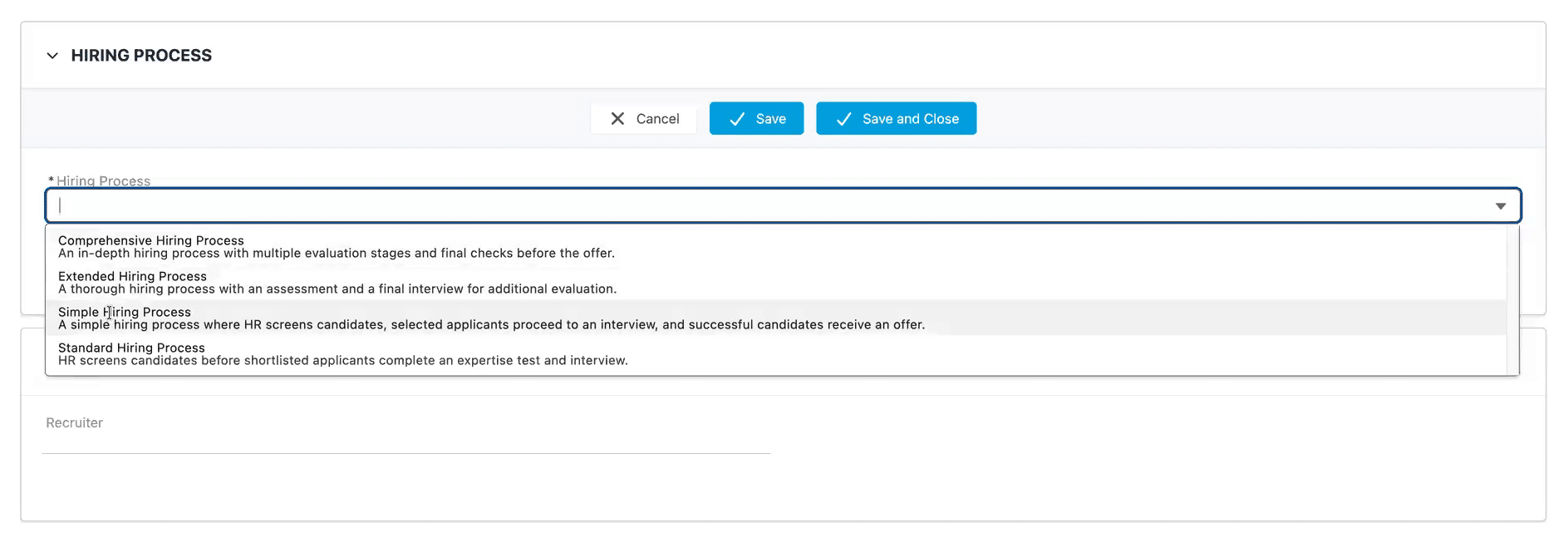
In Gecko, recruiters choose a configured hiring process for each vacancy record, known as a requisition. They can also set default participants for its stages. Applications linked to that vacancy then follow the selected process. You can prepare the route and the people involved before candidates start arriving.
What Does the Hiring Process Define?
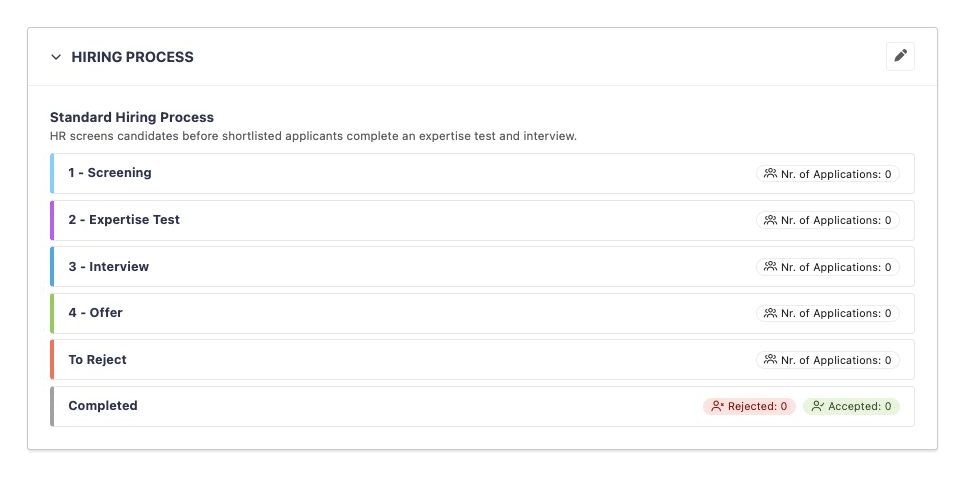
The hiring process sets out the selection stages for a vacancy. When choosing it in Gecko, the recruiter can see the steps in each available option and select the one that fits the role.
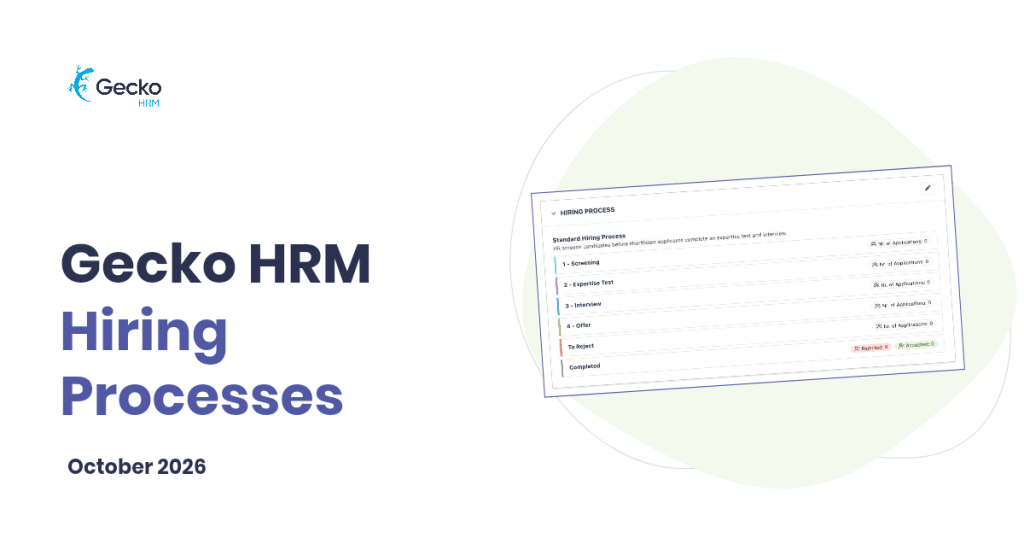
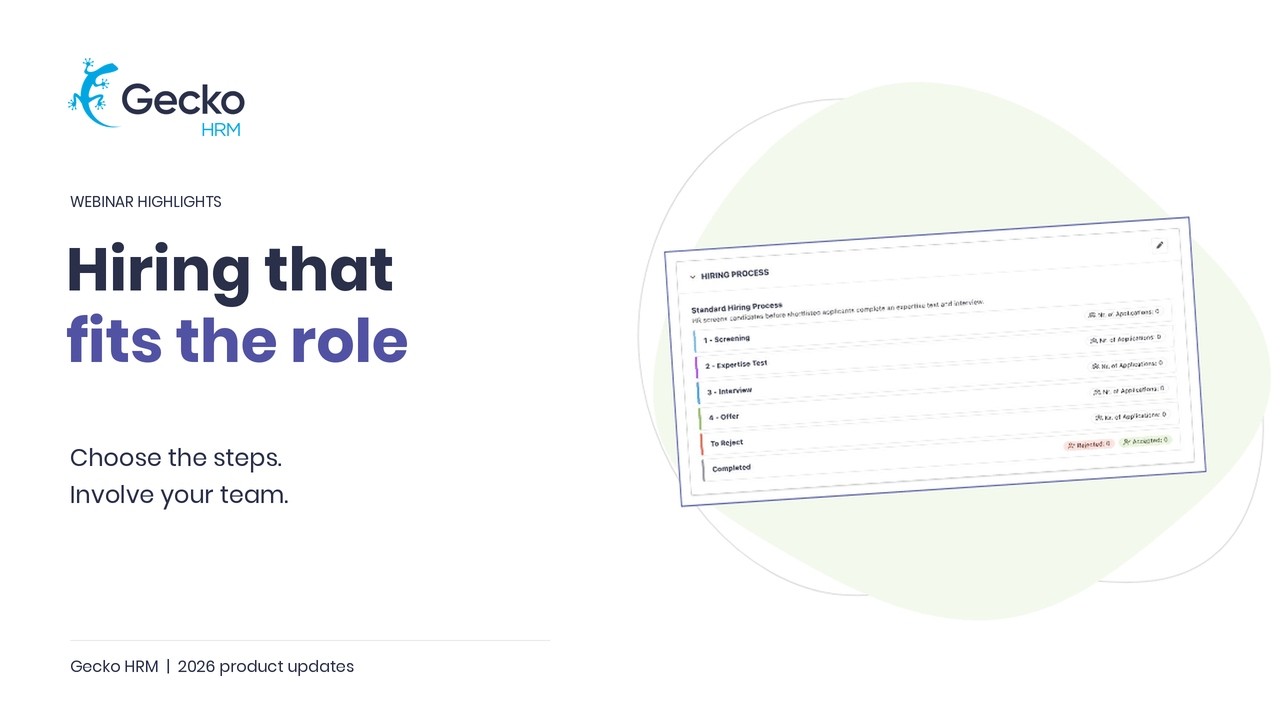
A straightforward route might run from HR screening to interview to offer. A role needing specialist assessment could include an expertise test before the interview and offer. These are examples of different selection journeys, rather than a rule about how every role should be filled.
Imagine two vacancies open at once. For an office coordinator, the team might agree that screening and a structured interview are enough. For a specialist engineering role, it might also need a practical assessment. The question is what evidence the team needs, and which configured process supports collecting it.
When Should You Choose the Process?
Choose the process before applications arrive. While a requisition has no related applications, its process can still be changed. Once applications exist, that requisition’s selected process cannot be changed.
That makes the setup conversation with the hiring manager worth having early. Check the necessary assessments, the order of interviews and the people who will contribute.
Gecko provides several configured options. If your organisation needs a different process, your implementation consultant can configure an additional one for recruiters to select alongside the existing choices.
How Do Default Roles Reduce Repeated Setup?
Default roles let you define who will handle the relevant interviews and evaluations for the requisition. The roles available depend on the process you have chosen.
If the same hiring manager will conduct the first interview for that vacancy, you can set that person once at requisition level. The recruiter does not then have to assign them separately on every incoming application. The same principle applies to other interview or assessment roles included in the chosen process.
A colleague may be away when one candidate reaches the interview stage. The recruiter can adjust the participant on that individual application. That keeps a one-off change local to the candidate’s application.
Who Can See the Applications?
Observer access is separate from assigning someone an interview or evaluation role. An observer added to a requisition gets viewing access to that requisition and its connected applications. An observer added to a particular application gets access to that application only.
That distinction is useful when deciding how widely someone needs to be involved. A colleague helping with one candidate may need a narrower view than someone following the whole vacancy. Check the appropriate access scope when setting up the team.
Can an Individual Application Move to Another Stage?
Yes. Recruiters can move an application to another stage and choose how the existing steps are treated, rather than having to work through every intervening step individually.
For example, an application may need to move directly to a later interview stage. The recruiter can make that change within the selected process. This flexibility concerns the individual application; it does not replace the requisition’s process with a different one.
It is still worth agreeing how the team will use that flexibility. The reason for moving a candidate should be clear to colleagues picking up the next step, particularly when an assessment or interview has been skipped.
What Should HR Agree Before Advertising?
A short planning check can cover the essentials: what you need to learn, which available stages will help you learn it and who will conduct each assessment. Choose the process, set the defaults and check access while preparing the job ad and application form.
The redesigned recruitment experience is available upon request. Existing customers can speak with Customer Success about enabling it and discuss any additional process configuration with their implementation consultant. A Gecko HRM demo can help you explore how these choices fit the way your team hires.
Watch our product team explain the hiring processes right here:



You might also like
View all posts