 hr
hr
 si
si
 sr
sr





AI Agents Are Entering HR: What Should We Automate, And What Should Stay Human?

Maja Sušnik, Marketing Specialist
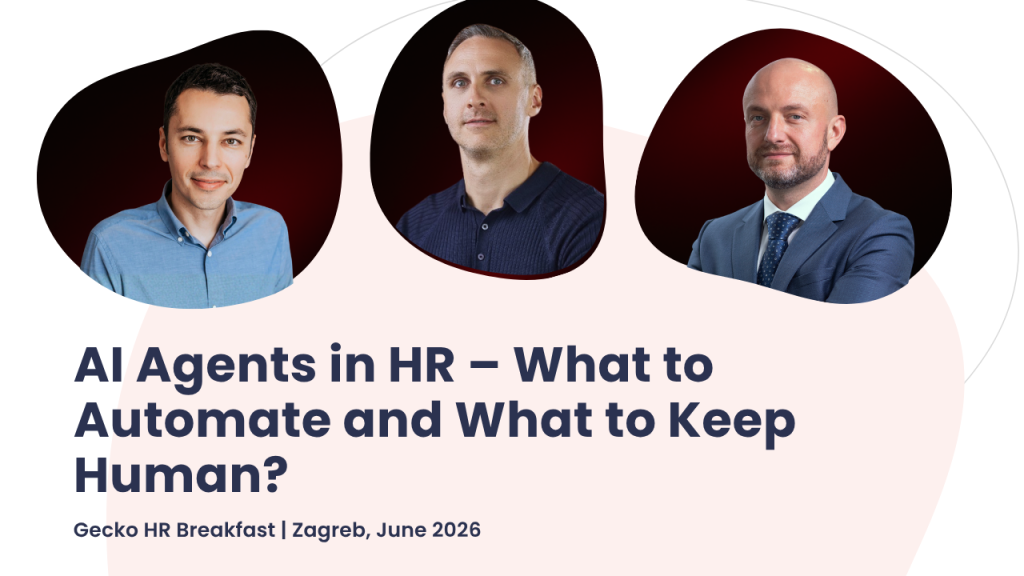
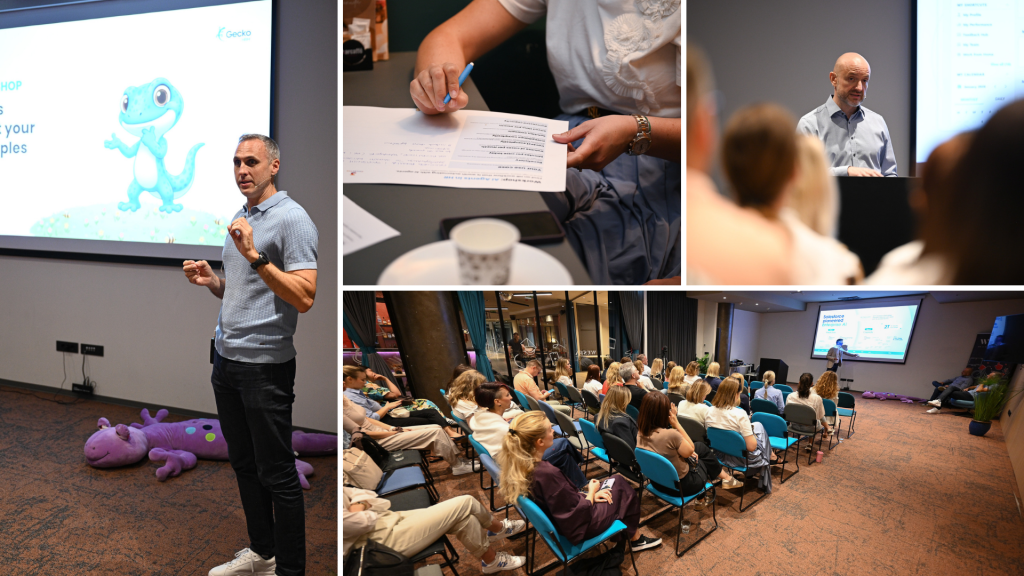
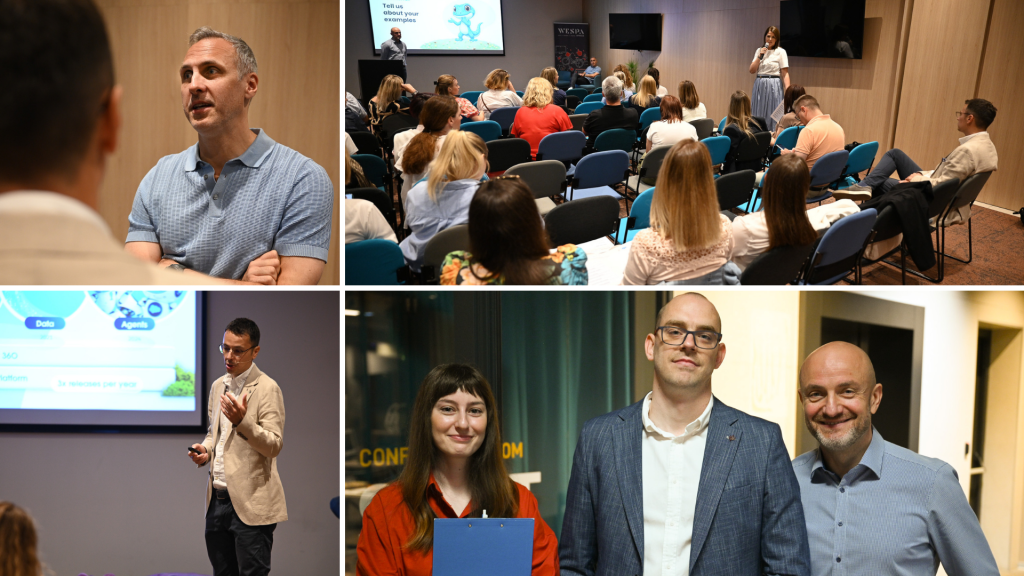
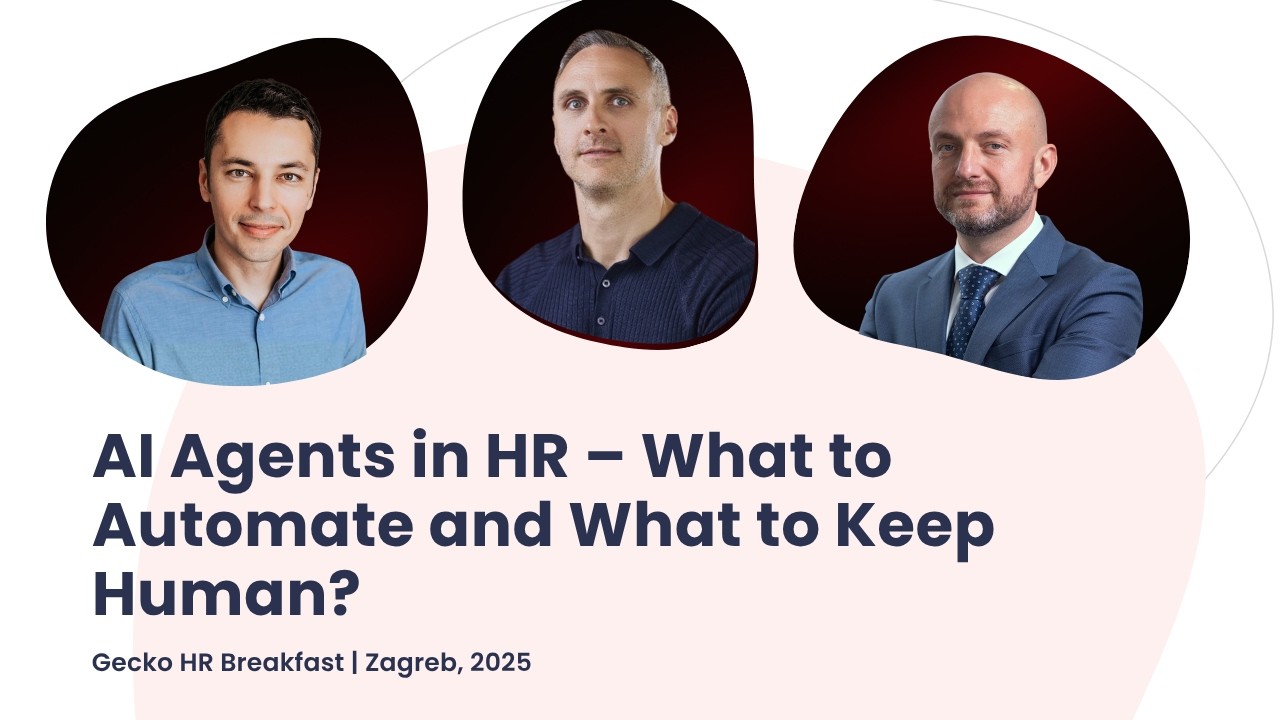
On 9 June 2026, HR leaders gathered in Zagreb for the Gecko HR Breakfast: AI Agents Are Entering HR, an interactive morning focused on one key question: what should HR automate with AI, and what should remain human?
Over coffee and discussion, organized by Gecko HRM, Agilcon and our partners 3Collective, the expert speakers and the audience explored how AI agents are moving from experimentation to practical use inside HR teams.
The message of the morning was clear. The future of HR is not humans versus AI. It is humans working with intelligent agents to reduce administration, improve employee experience and create more space for work that requires judgement, empathy and trust.
A New Wave of AI Is Arriving in HR
The event opened with Branko Banjeglav from Agilcon, who introduced the theme by reflecting on questions raised at a previous Gecko HR Breakfast event. AI had already emerged as one of the topics HR teams most wanted to discuss, especially where it can create value today and where organisations still need to be careful.
Zdravko Barec from Salesforce then introduced Agentforce and explained the difference between earlier AI chatbots and today’s agents. Chatbots are typically used to generate answers or support users with information, while agents go further by using business context, following defined rules and triggering the right next steps.
He also highlighted why platform foundations matter. Gecko HRM is built on Salesforce technology, which gives the platform enterprise grade security, scalability and compliance foundations, while enabling advanced AI capabilities to be applied directly within HR processes.
For HR teams, this shift opens the door to a new type of support model where agents can help with:
- Employee questions and policy guidance
- HR administration and document workflows
- Recruitment support and candidate summaries
- Manager preparation and feedback analysis
- Data checks, reminders and process prioritisation
The Practical Reality of Agentic HR
Marko Perme, CEO of Gecko HRM, brought the discussion directly into the HR context. His message challenged one of the biggest misconceptions in AI adoption: organisations do not need to start by automating everything.
As Marko explained during the event:
“The more boring your idea of what to identify as potential for automation is, the more a task frustrates you, the better candidate for AI automation it usually is.”
Instead of chasing complex, high risk use cases, HR teams should begin with narrow, reliable scenarios where the input is clear, the output is clear and the business value can be measured.
Marko introduced a simple framework for deciding what to automate and what to keep human:
- Implementation complexity: How much data, workflow access and context does the agent need?
- Compliance complexity: Could the agent influence a person’s career, such as hiring, promotion or performance decisions?
- Business value: How often does the task happen, and how much time could be saved?
His advice was practical. Start with use cases that are repetitive, frequent and time consuming. Then reinvest the time saved into areas where HR can create greater impact, such as better hiring, onboarding, retention and people development.
The Real ROI of AI in HR: Time Returned
During the workshop, participants explored where hidden time sits inside their own HR processes. The examples were grounded in everyday reality rather than science fiction.
Participants identified several workflows where AI agents could help, including:
- Reviewing job applications in formal recruitment processes
- Checking whether candidate documentation is complete and submitted on time
- Coordinating employee education and training administration
- Analysing training feedback from multiple formats
- Checking payroll preparation data before it is sent to accounting
- Supporting recruitment analytics for managers
One group described a recruitment process involving thousands of applications and strict formal requirements. Another explored how AI could help detect errors in payroll inputs before they become costly issues. A third looked at how recruitment data could be used to help managers improve the way they participate in hiring.
These examples showed where the real business case for AI begins. Not in replacing HR, but in returning time to HR teams so they can focus on higher value work.
Gecko AI Agents in Action
The event closed with a demonstration of Gecko AI agents embedded directly into the Gecko HRM platform.
These included:
- Employee Agent that answers questions about annual leave, policies, benefits and procedures,
- HR Agent that highlights priorities such as pending absences, expiring contracts and administrative tasks,
- Recruiter Agent that summarises candidate profiles, highlights strengths and risks, and suggests interview topics,
- Manager Agent that helps leaders interpret feedback and prepare for employee conversations.
The purpose of these agents is to remove repetitive work, surface relevant information and help people make better prepared decisions.
This is especially important in HR, where trust and control matter. AI agents must respect permissions, protect sensitive data and operate within clear governance rules. As the event made clear, compliance, auditability and security are not side topics. They are the foundation for responsible AI adoption in HR.
Four Lessons HR Leaders Took Home
By the end of the morning, several clear lessons emerged:
- Start small and specific: Focus on narrow use cases that can be implemented and measured.
- Look for boring work: The best candidates for AI are often repetitive, frustrating and time consuming.
- Measure time returned: If the value cannot be shown, the initiative will struggle to scale.
- Keep HR in control: Permissions, compliance, audit trails and governance must be built in from the start.
In other words, successful AI adoption in HR is not only about technology. It is about process maturity, data quality and knowing where human judgement must remain central.
Watch the Full Event Video
Missed the live session or want to revisit the insights? The full event recording is now available, including the workshop results discussion and Q&A. Click below to watch ⤵️
Ready To Explore Agentic HR In Your Organisation?
AI agents are no longer a distant concept. They are already becoming part of practical HR workflows.
If you want to see how agent based automation works inside a modern HR platform, book a Gecko HRM demo. Discover how centralised HR data, automation and AI agents can help your organisation return valuable time to HR, improve the employee experience and keep people at the centre of every decision.
You might also like
View all posts