 hr
hr
 si
si
 sr
sr





What HR Leaders Should Know About AI Agents

Jelena Rašula, Head of Marketing
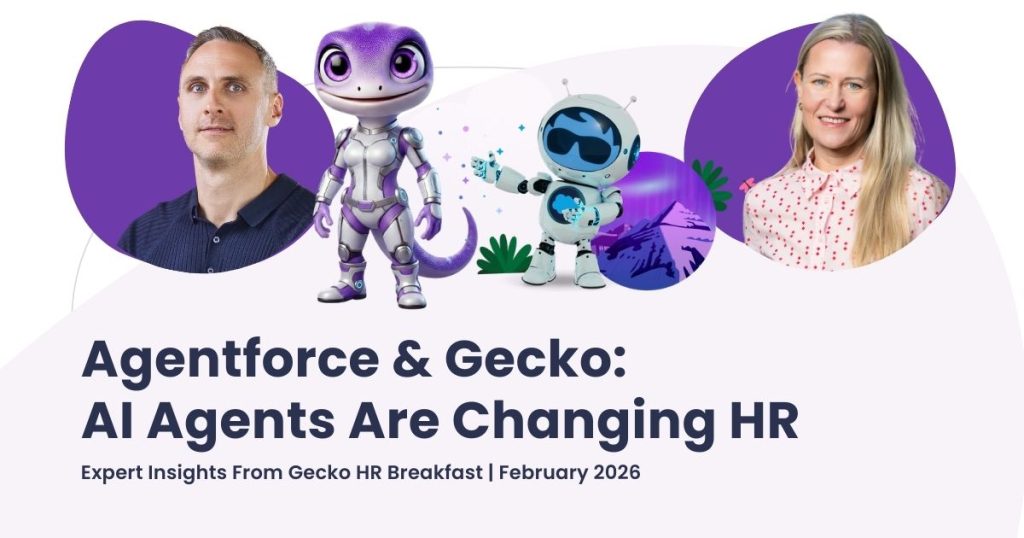
On 26 February 2026, HR leaders gathered in Prague for the Gecko Breakfast: AI Agents are entering HR, an interactive morning focused on one key question: the role of AI in HR – What should we automate and what should remain human?
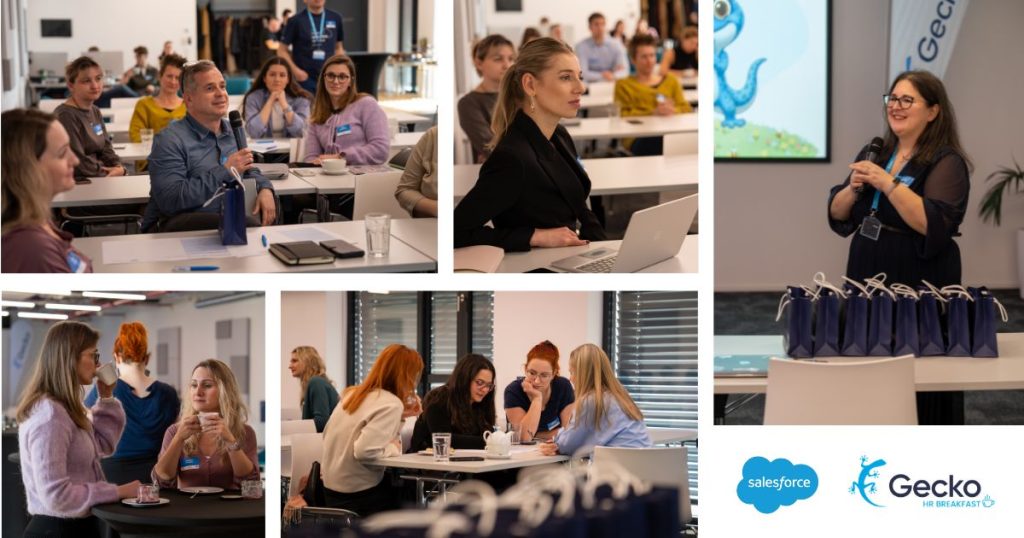
Over coffee and discussion at Enforum Prague, experts from Gecko and Salesforce explored how AI agents are moving from experimentation to practical use inside HR teams. The session combined strategic insights, real use cases, and a hands-on workshop in which participants identified HR workflows ready for automation.
The message of the morning was clear. The future of HR is not humans versus AI. It is humans working with intelligent agents to achieve better outcomes for employees and organisations.
A New Wave of AI Is Arriving in HR
The event opened with insights from Věra Janičinová from Salesforce, who explained that we are entering a new stage of AI adoption.
“For the past few years organisations have experimented with generative AI tools. Now the focus is shifting towards autonomous agents that can plan, reason and take action within business systems.”
Věra Janičinová, Salesforce
As she explained during the session: We are moving from AI tools to AI agents. Instead of asking AI for help all day, we assign it work and let it get things done.
She shared a practical perspective on how Salesforce itself is using Agentforce, Salesforce’s platform that enables organisations to deploy autonomous AI agents across business workflows. Unlike traditional chatbots or copilots that simply assist users, Agentforce agents can reason, plan and take action within company systems while operating inside a secure trust layer that protects sensitive data.
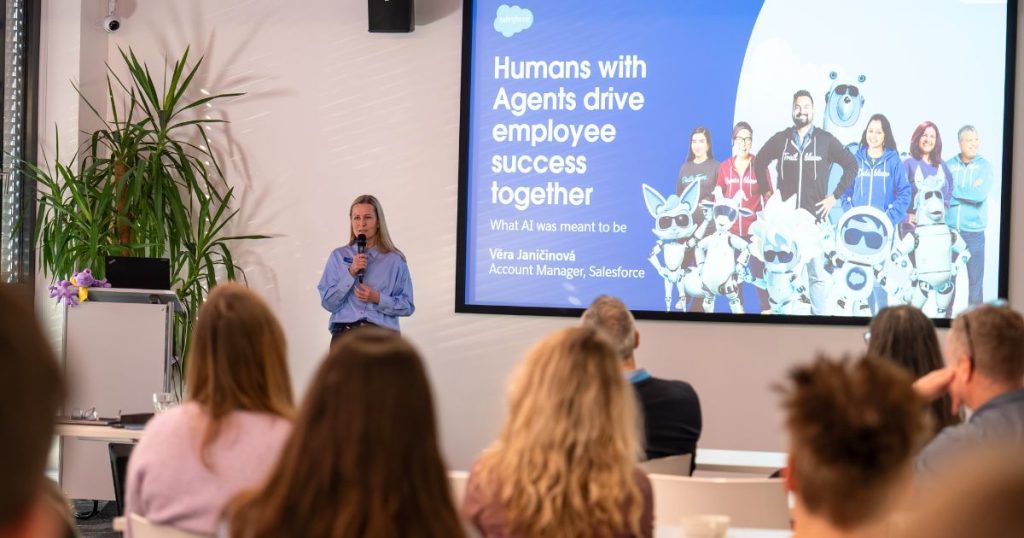
Věra demonstrated how Salesforce applies these capabilities internally, where AI agents help employees quickly resolve HR questions, access policies, and receive personalised support directly within tools such as Slack, significantly improving employee experience while reducing the operational burden on HR teams.
While traditional chatbots and copilots can assist employees, they still require constant prompting and supervision. Autonomous agents go further because they can:
- Understand business context
- Plan and execute tasks
- Work across multiple systems
- Operate continuously at scale
For HR teams, this shift opens the door to a new type of digital workforce that handles repetitive administration while people focus on strategy and employee experience.
The Practical Reality of Agentic HR
After the strategic overview, Marko Perme, CEO of Gecko HRM, demonstrated how agentic AI works in real HR workflows through Gecko AI. Instead of presenting abstract concepts, he showed practical examples of role-based AI agents embedded directly into the Gecko HRM platform.
These included:
- an Employee Agent that answers policy questions and helps employees access personal HR information,
- an HR Agent that highlights priorities such as approvals, documents and data quality tasks,
- a Recruiter Agent that summarises candidate profiles and prepares interview insights,
- and a Manager Agent that helps leaders interpret feedback and prepare for performance conversations.
His message challenged one of the biggest misconceptions in AI adoption.
“The best results today come from narrow, reliable use cases not from trying to automate everything.”
Marko Perme, Gecko HRM
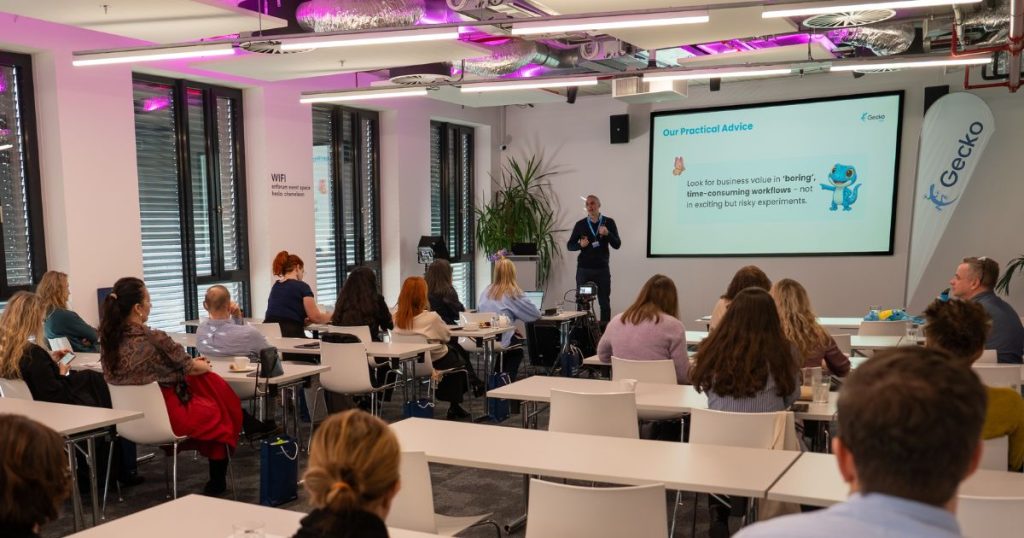
Instead of aiming for a fully autonomous HR department, organisations should begin with single-purpose agents that solve specific problems.
The Real ROI of AI in HR: Time Returned
During the workshop session, participants explored one of the most important questions for HR leaders:
Where is the hidden time in HR processes?
Across organisations, the biggest time drains tend to be surprisingly routine:
- HR administration and document workflows
- Employee questions and HR inbox requests
- Recruiting coordination and scheduling
- Manual reporting and spreadsheet updates
Even small improvements can produce a significant impact.
For example, a typical HR shared service team may receive 500 policy related questions per month. At six minutes per case, that represents around 50 hours of work each month. If AI resolves just half of these requests, the organisation gains 25 hours of HR capacity to reinvest in higher value initiatives.
This is the real business case for AI. AI that returns time allows HR teams to focus on people, not paperwork.
Four Lessons HR Leaders Took Home
By the end of the morning discussion, several clear lessons emerged.
- Start small and measurable: Focus on narrow workflows rather than trying to automate the entire HR function.
- Measure success through time returned: If the value cannot be measured, it will not scale.
- Governance is essential: AI in HR must operate with permissions, audit trails and data security.
- Data quality is the foundation: AI agents only work effectively when HR data is structured, centralised and reliable.
In other words, successful AI adoption in HR is less about technology and more about process maturity and data readiness.
Ready to Explore Agentic HR in Your Organisation?
AI agents are no longer a distant concept. They are already transforming HR workflows today.
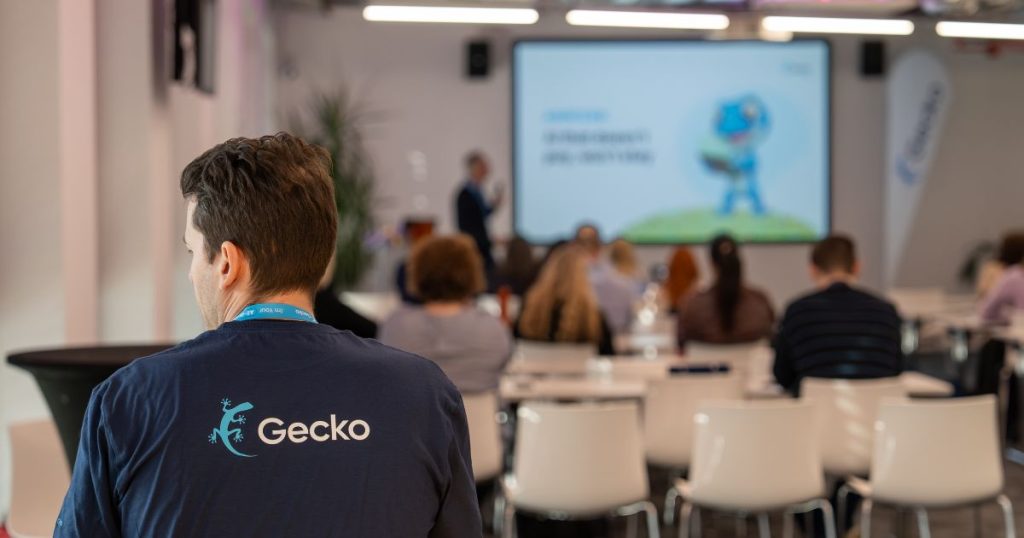
If you want to see how agent-based automation works inside a modern HR platform, the Gecko team would be happy to show you. Book a demo and discover how centralised HR data, automation and AI agents can return valuable time to your HR team while improving the employee experience.

You might also like
View all posts